
What is Milling and Do I Need It?
Milling is the process of removing the top layer of existing asphalt before applying a new surface. It’s one of the most effective ways to restore a smooth, even foundation while maintaining proper drainage and grade. However, milling isn’t always necessary — it depends on the condition of your pavement and what’s happening beneath the surface.
You may need asphalt milling if:
Your surface shows deep cracks or rutting. These indicate damage that extends beyond the top layer.
There are drainage or elevation issues. Milling corrects slopes, preventing water pooling or runoff problems.
Multiple overlays exist. If your pavement has been resurfaced several times, it may be too high for curbs, drains, or transitions.
The surface is uneven or rough. Milling smooths imperfections and prepares for a clean, uniform repave.
There’s structural fatigue but a solid base. When the subbase is still strong, milling and resurfacing is more cost-effective than full reconstruction.
When Milling May Not Be Necessary
If the asphalt surface is in generally good condition with only minor cracks or fading, simple sealcoating, patching, or resurfacing may be sufficient. In these cases, milling might add unnecessary cost without extending pavement life.
Benefits of Milling
Choosing to mill before repaving offers several long-term advantages:
Cost Efficiency: Reusing the existing base saves time and money compared to full replacement.
Improved Durability: Creates a clean, stable surface for the new asphalt layer, reducing future cracking and settlement.
Better Drainage: Restores correct elevation and slope for proper water runoff.
Eco-Friendly: The milled asphalt can be 100% recycled and reused in new pavement mixes.
Smooth, Professional Finish: Ensures even transitions to curbs, driveways, and adjoining pavement for a cleaner, more refined result.
Professional Evaluation
At Elite Asphalt Paving & Maintenance, we assess each surface individually to determine whether milling, resurfacing, or full replacement offers the best value and performance. Our precision milling process ensures proper depth, smooth transitions, and a perfect base for your new asphalt surface — built to last for years to come.
Why Is Sealcoating Important?
It all begins with an idea.
Why Sealcoating Is Important
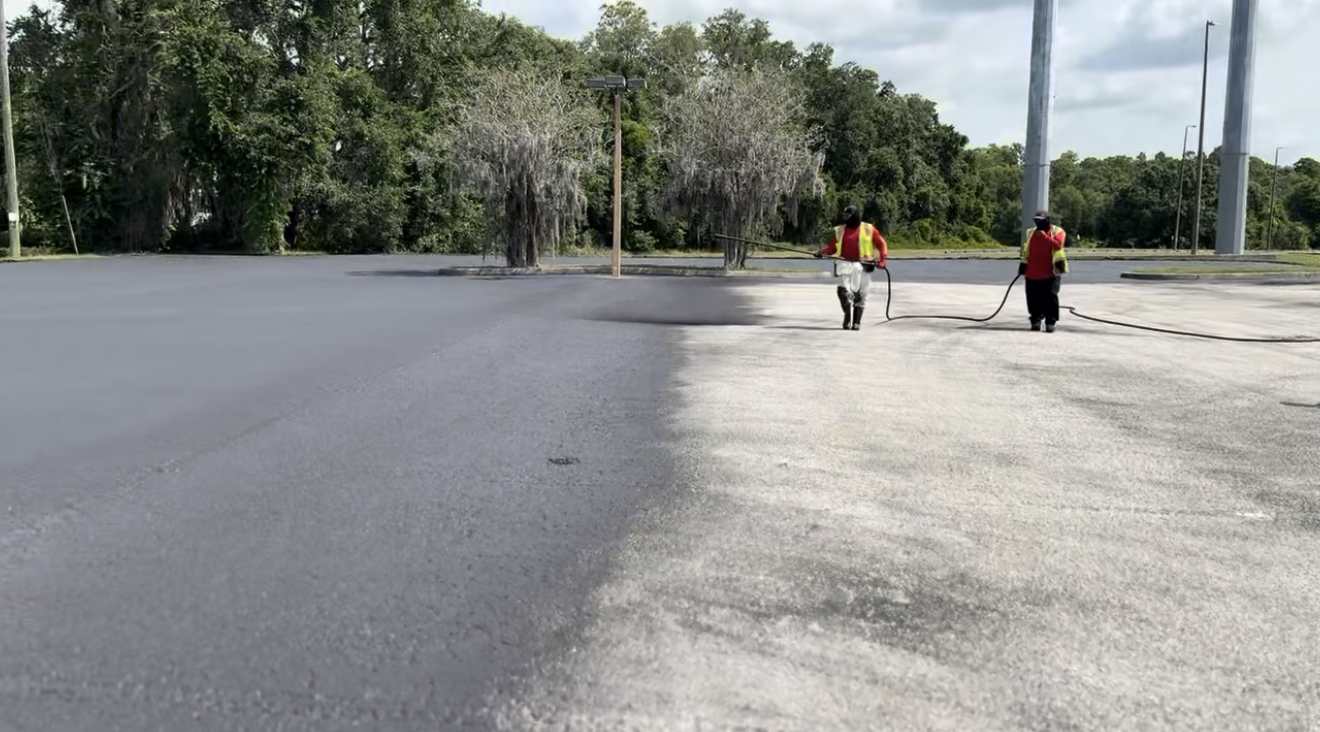
Sealcoating is a critical part of asphalt maintenance — it protects your pavement investment and keeps it looking sharp year after year. Constant exposure to sunlight, oil, rain, and traffic gradually breaks down asphalt, leading to cracking, fading, and deterioration. Sealcoating creates a protective barrier that shields against oxidation, moisture, and chemicals while restoring that rich, deep-black finish of freshly paved asphalt.
Regular sealcoating not only extends the life of your pavement but also reduces costly repairs, enhances curb appeal, and improves surface safety with a smoother, slip-resistant finish. It’s a cost-effective way to maintain a clean, professional image for your property or business.
Recommended Maintenance Schedule
To keep asphalt surfaces performing and looking their best:
First Application: 6–12 months after new asphalt installation (once the surface has fully cured).
Ongoing Maintenance: Every 2–3 years, depending on traffic volume and exposure to weather.
Visual Signs It’s Time to Reseal: Faded color, surface roughness, small cracks, or areas where water no longer beads on contact.
Consistent maintenance ensures your pavement remains protected, attractive, and structurally sound for decades.
The Advantage of Neyra Industries Tarconite
At Elite Asphalt Paving & Maintenance, we proudly use Neyra Industries’ Tarconite — one of the most trusted and proven commercial-grade sealcoats in the industry. Tarconite is a coal-tar emulsion sealer known for its exceptional durability and resistance to harsh elements. Its unique formula offers:
Superior Protection: Shields against UV rays, oil, gasoline, and chemical spills.
Longer Life: Outperforms conventional sealers with stronger adhesion and extended wear resistance.
Rich Finish: Provides a deep, uniform black color that enhances appearance and curb appeal.
Weather Resilience: Maintains flexibility and protection through extreme heat, cold, and heavy rain.
By using Tarconite, Elite Asphalt ensures every surface we seal meets the highest standards of quality, performance, and longevity — giving our clients the best value and results in the industry.
Usage & Application Notes
New asphalt pavement should cure for at least 30 days before application. Neyra+1
Surface must be clean, dry, sound, free of loose material, previous sealers containing gilsonite or chip seals (not recommended over those).
Temperature conditions: For “standard” Tarconite, ambient & pavement temperatures should be above ~50 °F, and no expected drop below 50 °F for 48 hours after application. For CWF version, can apply down to ~40 °F ambient/pavement.
For best wear life in high traffic areas, application of two full sand-slurry coats recommended for low/moderate traffic; a third coat advised for heavy traffic zones.
Equipment: Because of heavy-bodied nature, use specialized equipment (high-volume positive displacement airless spray or mechanical squeegee) to maintain homogeneous mix and uniform application.
Key Advantages
Up to ~50% greater wear-resistance compared to non-fortified standard sealers, making Tarconite well suited for high traffic areas.
Rich, deep black finish restores «like-new» appearance to old asphalt surfaces.
Excellent resistance to oils, gasoline, jet fuel, UV, and weathering—protecting your pavement investment over time.
When to Repave?
It all begins with an idea.
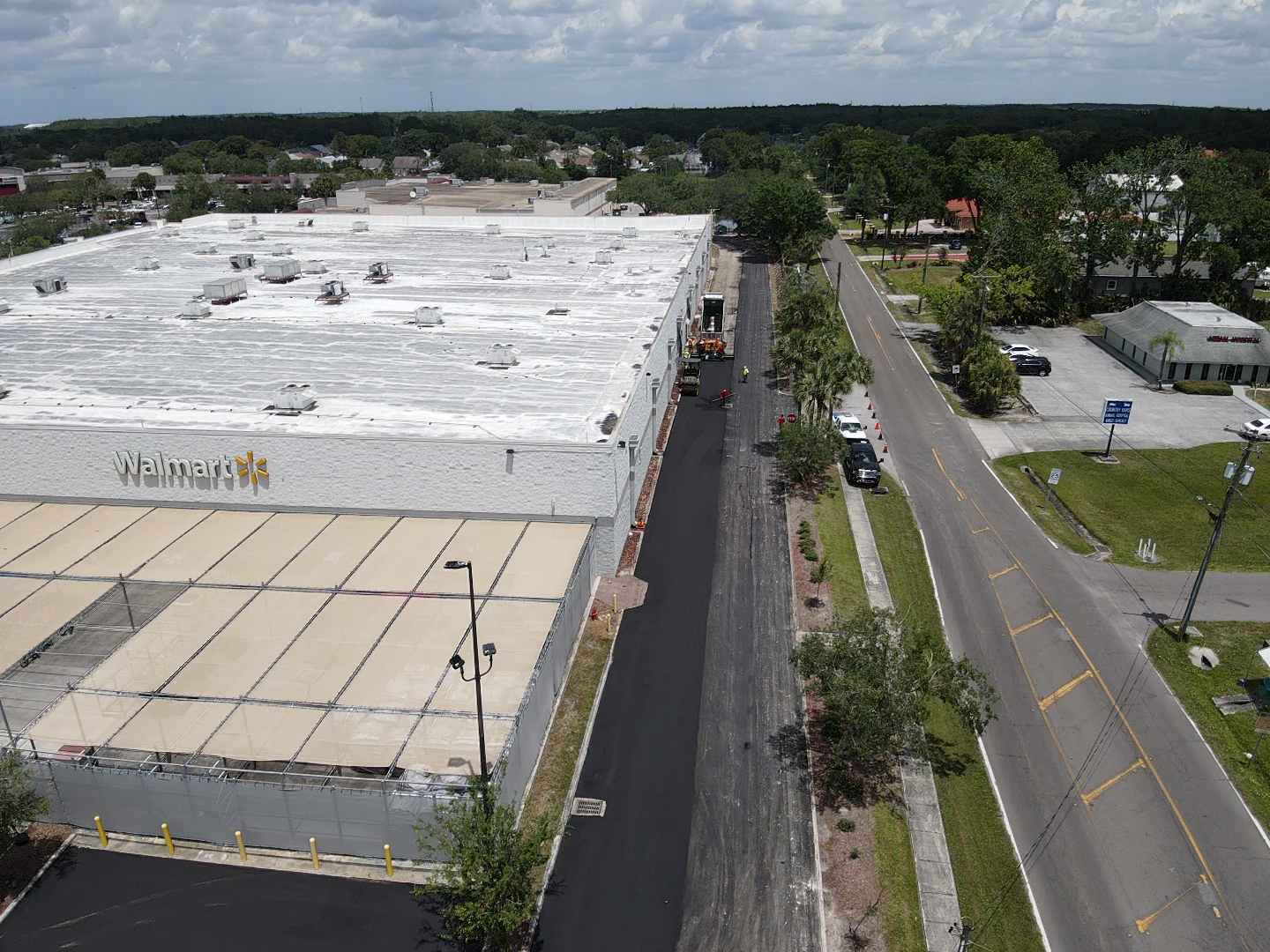
Even with proper maintenance and sealcoating, asphalt surfaces eventually reach a point where repairs are no longer enough. Repaving restores both the structure and appearance of your pavement, ensuring long-term safety, durability, and performance.
You should start thinking about repaving when you notice:
Widespread Cracking: Large “alligator” or spiderweb cracks that cover broad areas — a sign of base failure.
Potholes and Uneven Areas: Repeated patching or new potholes forming in the same spots indicate subbase weakness.
Drainage Issues: Water pooling or slow runoff often means the surface has lost proper slope or structural integrity.
Surface Erosion or Raveling: Loose gravel, faded color, and crumbling edges show the asphalt binder has broken down.
Multiple Patches and Layers: When more than 25–30% of the surface has been patched or resurfaced, a full mill and overlay is usually more cost-effective.
Recommended Timeline
Light-use residential driveways: 15–20 years between full repaving (with regular sealcoating every 2–3 years).
Commercial parking lots or roadways: 10–15 years depending on traffic volume, weather exposure, and maintenance history.
Heavily trafficked areas: May require milling and resurfacing every 8–12 years for optimal performance.
When Repairs or Resurfacing May Be Enough
Not every pavement issue requires full replacement. In some cases, strategic maintenance can extend the life of your asphalt for years:
Surface Cracks Only: Minor linear cracks can be sealed to prevent water intrusion.
Localized Damage: Isolated potholes or soft spots can be cut out and patched effectively.
Good Base Condition: If the underlying structure is stable, a mill and overlay (grinding down the surface layer and repaving) can restore performance at a lower cost.
Minor Fading or Wear: Sealcoating and crack filling can rejuvenate appearance and prevent further damage.
Professional Assessment
At Elite Asphalt Paving & Maintenance, we evaluate your pavement’s age, condition, and base structure to determine whether repairs, resurfacing, or full replacement is the most cost-effective option. Our goal is to protect your investment with the right solution — not just a temporary fix.